Clint Van Marrewijk
April 8, 2026
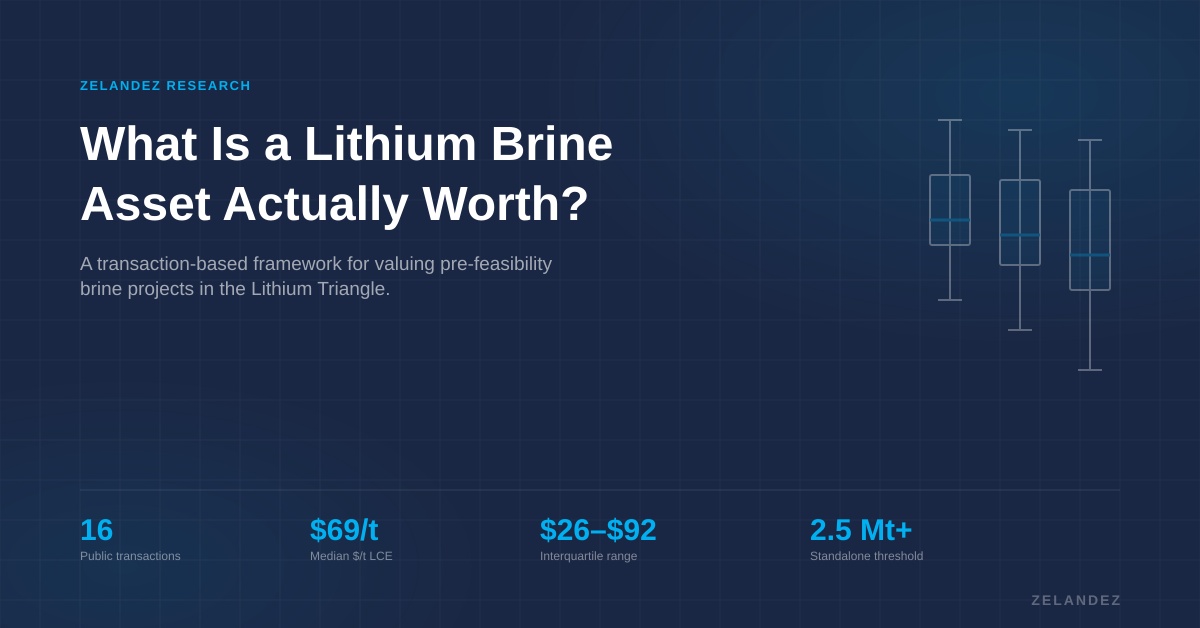
A transaction-based framework for valuing pre-feasibility brine projects in the Lithium Triangle
Lithium brine assets are genuinely hard to value.
Particularly those sitting between maiden resource and feasibility (pre-production assets).
So if you own one, or you are buying one. How do calculate a number?
Start with what’s actually traded
Let’s sample 16 brine asset transactions in the Lithium Triangle that have been completed (over the past 8 years).
Those that had both a published transaction value and a compliant resource estimate.
Divide the enterprise value paid for the total resource, and you get a key metric: dollars per tonne of LCE in the ground
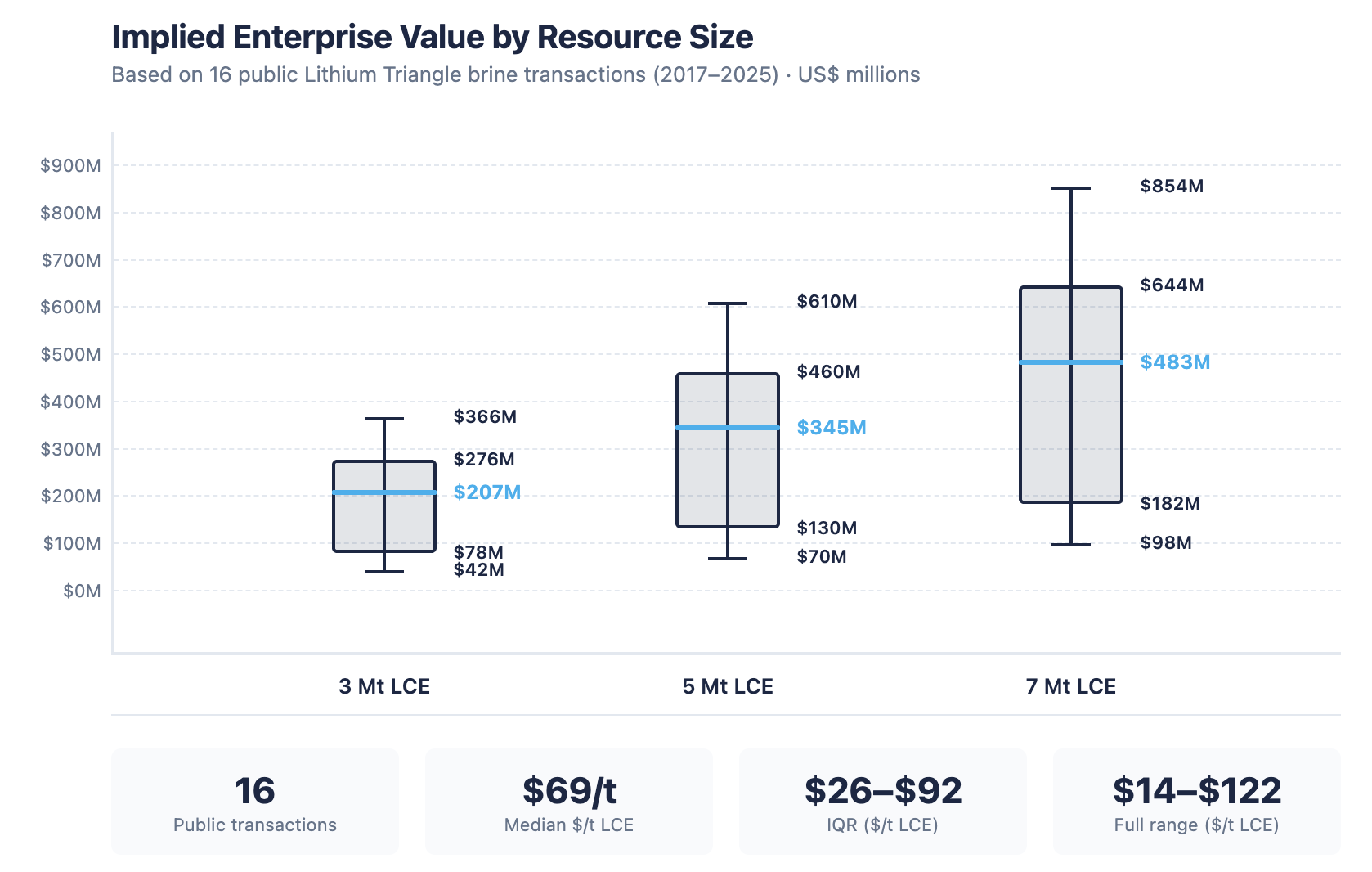
Across those 16 deals the median is US$69/t LCE, with an interquartile range of $26–$92/t.
The bottom quartile tends to be dominated by early-stage assets or distressed sellers.
The top quartile reflects either good-timing, or a good project, or both.
This median price then, is a defensible starting point for a pre-feasibility study brine asset, with a credible resource.
- To revisit the 11 key attributes that matter for lithium brine project quality, see our previous post here.
The 2.5 million ton question
A $/ton metric only gets you halfway.
The other key question is: how big does a resource need to be to produce?
Size matters: We looked at the brine projects in the Lithium Triangle that have reached production. All nine have resources above 2.5 Mt LCE. The smallest being POSCO’s Sal de Oro at 2.54 Mt (working from public data).
In our opinion, the rule of thumb is: 2.5 million tonnes of LCE is where a brine project transitions from an “interesting asset” to a “potential standalone producer.”
Below that size, and there should be a discount applied to the price per tonne in the ground.
Putting it together
- A 3 Mt resource at the median price implies: $207 million.
- A 5 Mt resource: $344 million.
- A 7 Mt resource: $481 million.
These 'quick and dirty' figures are linked to what buyers have actually paid, through the highs and lows, of the lithium price cycle.
In theory the spread inside the quartile ranges above, would be impacted by the variables that matter: lithium grade, impurities, project stage, infrastructure, water access, etc.
For example a project at 800 mg/L with good road access, should sit in the upper quartile. A project at 200 mg/L on a remote salar, with no water rights, should sit in the lower quartile...
That is what you would expect. But there are of course transactions that are outliers.
The bottom line
Sixteen potential producers. A $69/t median value.
Target a resource above 2.5 Mt if you want to talk about standalone production. Or be willing to accept a discount.
The hard part of course, is getting the geology and flowsheet right…
But that’s a different post.
The above is part of a three part series:
- Part 1 is here: Lithium Brine 101.
- Part 2 is above.
- Part 3 is here: Three core frameworks for lithium brine owners.
-- // --
About Zelandez: We strive to be aligned with the goals of brine miners. Zelandez has been providing independent lithium brine services for a decade: hydrogeology, process engineering, full project managment, and project economic support. Lithium brine services is our speciality area, and our only focus. More information can be found here.
Recent Posts
Three frameworks for lithium mine owners and buyers
Lithium Brine 101: How to compare and value lithium brine deposits
Using Digital Twin Technology in the Lithium Brine Industry
How the Inflation Reduction Act and US Trade Policy Could Handicap Its Ability to Harness Argentine Lithium Supply
The Lithium Brine Industry Must Share Reinjection Best Practices